找到根因,才能找到最彻底和最简单的解决方案。但是传统的5 Why不好用,而"问题描述方式"很容易误导人(最常用的就是问题描述中暗含了对问题的分析甚至解决方案)。
Shainin认为,如何提出Why至关重要。正如本文所说:When conducting a 5 Why investigation, how we phrase the question will very much determine the type of answer we get and ultimately what course of action we take.
本文的例子:不要从问题(锁臂断裂)直接到一个显而易见的答案(替换更坚固的材料),而是更充分的失效分析——首先使用多变量分析,锁定是某一个"测试夹具"的问题;然后对该测试夹具进行"部件搜索",进一步确定根因。最终只需要一个微小的改动,就可以彻底解决问题!
当问题被彻底解决,问题看起来总是很简单。
Refining The Art Of Asking Why - How To Get The Right Answers From 5 Why's
精炼提问的艺术——如何从5个为什么中获得正确答案
In the current manufacturing and engineering environment, companies have complex problems triggering issues like scrap, non-scheduled overtime, poor product performance, and warranty claims, resulting in heavy losses and impacting bottom lines.
在当前的制造和工程环境中,企业面临着复杂的难题,这些问题引发了诸如废品、计划外加班、产品性能不佳和保修索赔等问题,导致巨额损失并影响盈利能力。
Companies may try to solve these complex problems with traditional Root Cause Analysis methodologies, but often the expected results fall short.
企业可能会尝试使用传统的根因分析方法来解决这些复杂问题,但往往事与愿违,未能达到预期效果。
The most critical problems are those that 'have always been there' and people in these organizations have just learned to live with them. The good news is they don't have to.
最关键的问题是那些"一直存在"的问题,而这些组织中的人们已经习惯了与它们共存。好消息是,他们不必再如此。
INTRODUCTION TO THE 5 WHY METHOD
5个为什么方法的介绍
Many companies which have successful Lean Manufacturing programs, use a 5 Why interrogative approach for technical problem solving to arrive at a root cause. By starting with the end result or symptoms of a problem and asking "why" a series of times, often the initiating cause can be identified.
许多成功实施精益制造计划的公司,在技术问题解决中采用"5个为什么"的提问方法来找出根本原因。通过从问题的最终结果或症状开始,并连续多次追问"为什么",通常可以识别出最初的起因。
This can be a very powerful method since only by understanding the true cause of a problem can the simplest and most effective solutions be flushed out and put into place. However, there are two major challenges with the 5 Why approach:
这是一种非常有效的方法,因为只有理解了问题的真正原因,才能找出最简单、最有效的解决方案并付诸实施。然而,"5个为什么"方法存在两大主要挑战:
1.) How to answer why when the answer is not known.
1.) 当答案未知时,如何回答"为什么"。
2.) How the question is phrased. A subtle change in the wording will lead the team in a completely different direction.
2.) 问题的措辞方式。措辞上的细微变化将使团队走向完全不同的方向。
SHAININ'S APPROACH TO ASKING WHY
SHAININ的提问方法
At Shainin, we are also interested in asking why, in order to get to the true root cause of problems. Our focus is on perfecting what questions get asked and using the evidence that is available or generated to provide the answers. Some of our clients have described our approach as "refining the art of asking why".
在Shainin,我们也致力于追问"为什么",以找出问题的真正根本原因。我们的重点是完善提问方式,并利用现有或生成证据来提供答案。我们的一些客户将我们的方法描述为"精炼提问的艺术"。
AN EXAMPLE: ELECTRICAL CONNECTOR FAILURE
案例:电气连接器故障
A problem with a broken locking arm on an electrical connector illustrates the typical usage of a 5 Why approach (four whys in this example) and then contrasts it with the Shainin approach. The problem manifested itself as an inoperative automotive electrical component occurring in the field.
一个电气连接器锁臂断裂的问题,展示了"5个为什么"方法的典型应用(本例中为四个为什么),并将其与Shainin方法进行了对比。该问题表现为现场出现的汽车电气元件失效。
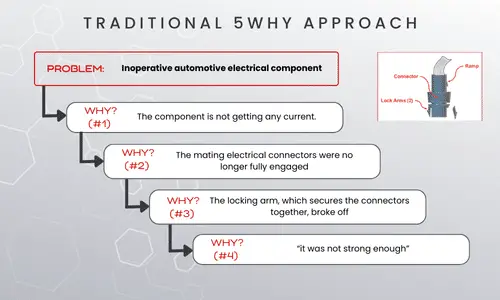
Asking WHY (1) revealed that the component was not getting any current. Asking WHY (2) revealed that the mating electrical connectors were no longer fully engaged. Asking WHY (3) again revealed that the locking arm which secures the connectors together had broken off. Asking WHY (4) the locking arm broke, the team answered with "it was not strong enough".
追问第一个"为什么"揭示了该元件没有电流。追问第二个"为什么"揭示了配对的电气连接器不再完全接合。再次追问第三个"为什么"揭示了将连接器固定在一起的锁臂已经断裂。追问第四个"为什么"锁臂断裂,团队回答说"它不够坚固"。
LIMITATIONS OF TRADITIONAL PROBLEM-SOLVING
传统问题解决方法的局限性
So what corrective actions were available? Most engineers with any experience could develop a list of potential improvements to make the locking arm on the connector stronger; change the material to one which is stronger, increase the wall thickness, increase the fillet radius, etc. This is a very typical approach.
那么有哪些纠正措施可用呢?大多数有经验的工程师都可以制定一份潜在改进清单,以使连接器上的锁臂更坚固;例如,更换更坚固的材料,增加壁厚,增加圆角半径等。这是一种非常典型的方法。
Using this thought process, how do we know if we have identified the "best solution"; that is, the cheapest and easiest to implement, with the lowest risk of creating a new problem? The changes mentioned to strengthen the locking arm are all design changes. Changes to a design which has already been validated involves cost and risk. Is a design change really necessary? Most connectors produced are not failing. Is it possible that a minor process change or perhaps tighter control over a particular parameter could also fix the problem?
采用这种思维过程,我们如何知道是否找到了"最佳解决方案";即成本最低、最易实施且产生新问题风险最低的方案?上述提及的加强锁臂的改变都属于设计变更。对已验证设计进行变更涉及成本和风险。设计变更真的有必要吗?大多数生产的连接器并未失效。是否有可能通过微小的工艺改进或对特定参数更严格的控制也能解决问题?
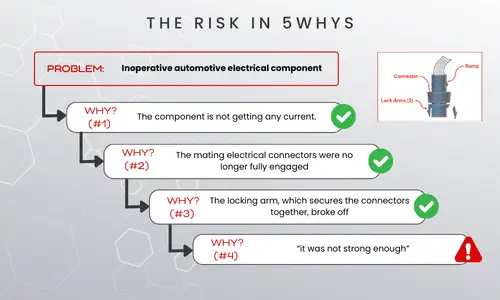
There are many unknowns surrounding this problem, thus there is a risk that the team has walked past a simpler solution beyond the ones proposed. While the first 3 answers to WHY are confirmed through measurements and observation, the fourth one of why the locking arm broke leaves much to be desired.
这个问题存在许多未知因素,因此团队有可能错过了比现有提议更简单的解决方案。虽然前三个"为什么"的答案通过测量和观察得到了证实,但关于锁臂为何断裂的第四个答案却不尽如人意。
The team felt that they had to come up with an answer and so they arrived at an obvious conclusion. In fact, the problem is not so much with the answer (the locking arm was not strong enough) but with the question. When conducting a 5 Why investigation, how we phrase the question will very much determine the type of answer we get and ultimately what course of action we take. Shainin methods would provide a more structured approach to these questions.
团队觉得他们必须得出一个答案,于是他们得出了一个显而易见的结论。事实上,问题不在于答案(锁臂不够坚固),而在于问题本身。在进行"5个为什么"调查时,我们如何措辞问题将在很大程度上决定我们得到的答案类型以及最终采取的行动方案。Shainin方法将为这些问题提供一种更结构化的方法。
REFINING QUESTIONS WITH SHAININ METHODS
用SHAININ方法精炼问题
Before asking why the locking arm broke, we could have asked:
在询问锁臂为何断裂之前,我们可以先问:
- Was the locking arm subjected to an abusive amount of energy which would have broken any connector? / 锁臂是否承受了过大的能量,以至于任何连接器都会断裂?
- Why did the locking arm break in the exact location that it did? / 锁臂为何恰好在那个位置断裂?
- Why did only 1 out every 100 break? / 为何每100个中只有1个断裂?
- Were the failures produced on the same dates? / 故障是否发生在相同的生产日期?
- Did connectors made in certain mold cavities have a higher failure rate than others? / 特定模具型腔生产的连接器是否比其他模具型腔生产的连接器有更高的故障率?
- Did connectors tested in certain fixtures have a higher failure rate than others? / 在特定夹具中测试的连接器是否比其他夹具测试的连接器有更高的故障率?
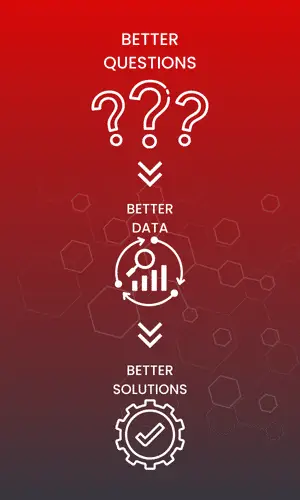
These questions help us gain further insight into the failure. And while the 5Why questions start to do that, we need more information before we jump to the broader question of "Why did it break". Once the answer to some of these questions were obtained, then the correct "Why" could be asked.
这些问题帮助我们进一步深入了解故障。虽然"5个为什么"的问题开始发挥作用,但在我们跳到更广泛的"它为什么断裂"这个问题之前,我们需要更多信息。一旦获得其中一些问题的答案,就可以提出正确的"为什么"了。
DISCOVERING THE TRUE ROOT CAUSE
发现真正的根本原因
The team working with their Shainin coach developed a test in order to measure the energy required to replicate the failure mode. After testing samples that were selected from different batches, over different build dates, from different mold cavities and different test fixtures, they learned that there was a significant difference in the strength between some parts coming from the multiple test fixtures.
团队与他们的Shainin教练合作,开发了一项测试,以测量复制故障模式所需的能量。在测试了从不同批次、不同生产日期、不同模具型腔和不同测试夹具中选取的样品后,他们发现来自多个测试夹具的一些部件在强度上存在显著差异。
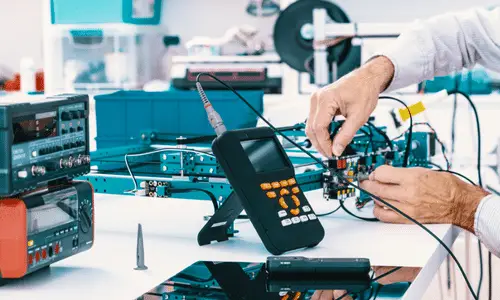
Each completed wire harness is tested by pressing the electrical connector into a test fixture to ensure electrical connectivity. A pattern was soon observed that connectors that were tested in a specific test fixture were then weaker when evaluating their strength to fail. But what was different with this test fixture as compared to others which did not result in a decrease in part strength. Nothing obvious jumped out.
每个完成的线束都通过将电气连接器压入测试夹具来测试,以确保电气连接性。很快观察到一个模式,即在特定测试夹具中测试的连接器在评估其失效强度时会变得更弱。但是,与没有导致部件强度下降的其他测试夹具相比,这个测试夹具有什么不同呢?没有明显的差异。
The team used a Component Search strategy and quickly converged on the key component of the fixture and then the dimensional difference between the best and worst test fixtures. Small cracks were being generated in some locking arms during the electrical check as the connector was inserted into the test fixture, and then propagating in the field under vibratory load.
团队采用了组件搜索策略,迅速锁定了夹具的关键组件,然后找到了最佳和最差测试夹具之间的尺寸差异。在电气检查过程中,当连接器插入测试夹具时,一些锁臂产生了微小裂纹,随后在振动载荷下在现场扩展。
The corrective action was a minor change to a critical feature of the test fixture, which was interfering with the locking arm, putting unnecessary stress on it as it was engaged during final acceptance testing. No engineering change was necessary.
纠正措施是对测试夹具的一个关键特征进行了微小改动,该特征在最终验收测试中与锁臂发生干涉,对其施加了不必要的应力。无需进行工程变更。
IMPLEMENTING EFFECTIVE CORRECTIVE ACTIONS
实施有效的纠正措施
The key part of this project was asking the right questions. The answers to these new questions revealed previously unknown differences and opportunities. Using Shainin methods, these questions were developed methodically, so that for any technical problem, the appropriate way to ask "Why" will help to uncover the true causes with simple solutions. In fact, we think of Shainin Red X Problem Solving as 5 Why for hidden causes.
这个项目的关键在于提出了正确的问题。这些新问题的答案揭示了以前未知的差异和机会。通过使用Shainin方法,这些问题被系统地开发出来,因此对于任何技术问题,适当的"为什么"提问方式将有助于发现真正的根本原因并提供简单的解决方案。事实上,我们认为Shainin Red X问题解决法是针对隐藏原因的"5个为什么"。
CONCLUSION: ENHANCING PROBLEM-SOLVING WITH SHAININ
结论:用SHAININ增强问题解决能力
5 Why is an effective approach for solving problems where the cause can be discovered through simple observation. But if the result of your investigation does not provide an answer which explains the variation in performance (why are only some of our products failing?), then your solution will not be as targeted as it could be, and instead may involve a design or process change that may be unnecessary.
"5个为什么"是一种有效的问题解决方法,适用于通过简单观察即可发现原因的问题。但是,如果您的调查结果未能提供一个解释性能差异的答案(例如,为什么只有部分产品出现故障?),那么您的解决方案将无法达到应有的针对性,反而可能涉及不必要的设计或工艺变更。
For these more complex problems where the true cause is hidden, learning to apply the Shainin methods to supplement your 5 Why process will be a worthwhile investment.
对于这些真正原因隐藏的更复杂问题,学习应用Shainin方法来补充您的"5个为什么"流程将是一项值得的投资。
ABOUT THE AUTHOR / 关于作者
John Abrahamian,Shainin 问题解决执行副总裁(Executive VP - Problem Solving)。机械工程学士(康涅狄格大学),工商管理硕士(伦斯勒理工学院)。从事精益制造和问题解决工作逾三十年,服务领域涵盖航空航天、汽车、医疗设备和消费品。